Every person’s fertility story unfolds differently. For some, parenthood comes early. For others, it arrives later—after careers have grown, relationships have evolved, or life has taken a few unexpected turns. Wherever you are in that story, one truth remains: time matters when it comes to the health of your eggs.
Freezing your eggs doesn’t pause life—it expands it. It offers the freedom to build your family when the timing feels right for you, not your biological clock. At Fertility Specialists of Texas (FST), we help you explore that choice with honesty, compassion, and science on your side.
For more detailed information, download our eBook.
Request AppointmentThe Science of Timing for Egg Freezing
Egg freezing, or oocyte cryopreservation, is a way to preserve your unfertilized eggs while they’re still healthy and abundant. But just like every cell in your body, eggs change with time. You’re born with a finite number of them, and no new eggs are ever made. As you age, both the quantity and quality of those eggs gradually decline.
According to the American Society for Reproductive Medicine (ASRM), egg count decreases slowly in your 20s, more rapidly after your mid-30s, and sharply after 40.*
That’s why many fertility specialists describe your 20s and early 30s as the ideal window for egg freezing. The eggs you freeze during this time are more likely to be chromosomally normal, meaning they have a stronger potential to develop into healthy embryos in the future.
That doesn’t mean you’ve missed your chance if you’re older. People freeze eggs successfully in their mid-to-late 30s all the time. What’s important is understanding your current fertility health through testing and creating a personalized plan that fits your goals.
Ideal Age vs. Right Time for Egg Freezing
When you ask, “What’s the best age to freeze my eggs?” the honest answer is—it depends. Biologically, earlier is better. Emotionally, financially, and personally, the right time is when you’re ready.
Think of it like investing in your future. Freezing eggs in your 20s and early 30s often yields the best outcomes, because:
- You typically have a larger number of eggs available for retrieval.
- Each egg tends to have higher genetic integrity, lowering the risk of miscarriage or chromosomal abnormalities later.
- You may be able to preserve more eggs with fewer stimulation cycles, saving time and cost.
But that doesn’t mean it’s too late if you’re older. Your physician will evaluate your ovarian reserve (through hormone testing and ultrasound) and help you make an informed decision. Many people in their 30s find comfort in knowing they’re taking proactive steps, even if they’re freezing later.
The best time is when you’re both informed and emotionally ready—when the decision feels like a gift to your future self, not a race against time.
What Happens During Egg Freezing
The egg freezing process is a partnership between you and your fertility team, guided by precise science, medicine, and compassion. Here’s how an egg freezing cycle typically unfolds:
Consultation and Testing
You’ll meet with a board-certified reproductive endocrinologist who will review your health, reproductive history, and goals. Hormone testing (including AMH and FSH levels) and ultrasound imaging help determine your ovarian reserve.
Ovarian Stimulation
You’ll take fertility medications for about 10–12 days to encourage your ovaries to produce multiple eggs. Throughout this time, you’ll have routine monitoring appointments to track progress and adjust medications as needed.
Egg Retrieval
Once your follicles are ready, your physician performs a brief outpatient procedure under light sedation to retrieve the mature eggs. Most people resume normal activities within a day of retrieval.
Vitrification and Storage
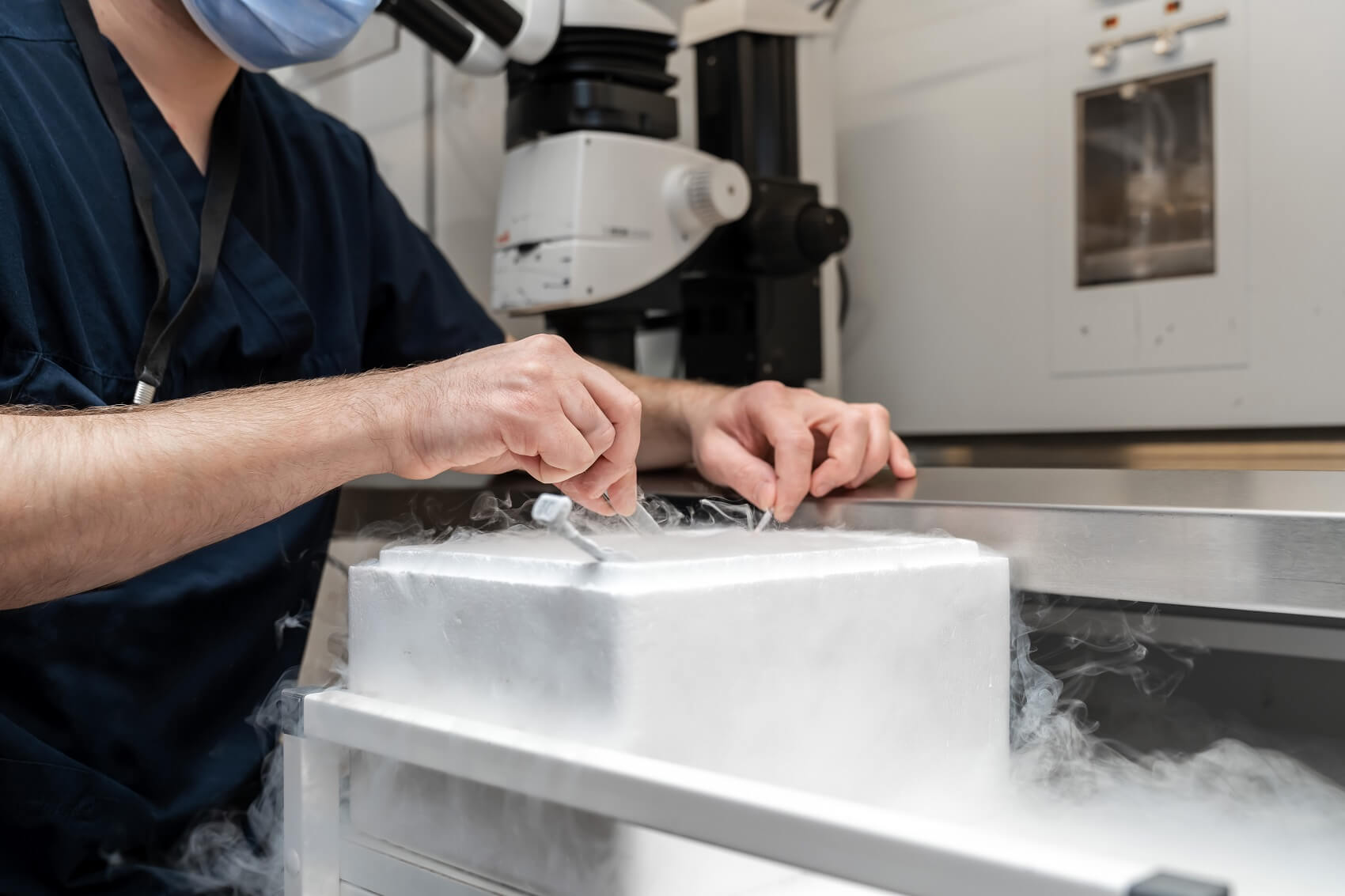
Your eggs are rapidly frozen through a technique called vitrification, which prevents ice crystal formation and preserves quality. They are then safely stored in our state-of-the-art cryogenic facility until you’re ready to use them.
Egg Freezing Is About More Than Biology
For many, the decision to freeze eggs is about more than medicine or science—it’s about self-trust. It’s about giving yourself permission to grow, explore, and live your life without feeling like time is working against you.
You might be focusing on your career, waiting to meet the right partner, healing after medical treatment, or simply wanting options for the future. Egg freezing honors all of those paths. It says:
My story is still unfolding—and I’m allowed to plan for the next chapter on my own terms.
Your fertility team at Fertility Specialists of Texas will guide you through every emotional and physical step with empathy and clarity. We believe your reproductive choices should always be supported, never rushed.
Questions to Ask Yourself Before Freezing Your Eggs
If you’re considering egg freezing, take time to reflect on these questions:
- How important is having a biological child in the future?
- How would I feel if I waited and my fertility declined?
- Do I want to start a family soon, or is that years away?
- Am I emotionally and financially ready for this step now?
Your answers don’t have to be perfect. What matters is that you’re thinking ahead—and giving yourself permission to take control of your reproductive future.
Frequently Asked Questions
The Heartfelt Decision to Freeze Your Eggs
The best time to freeze your eggs isn’t just about age—it’s about alignment. It’s when your goals, your readiness, and your science all meet in one place. It’s when you choose hope, preparation, and possibility.
At Fertility Specialists of Texas, we see egg freezing as an act of empowerment—a chance to give your future self the opportunity to choose when and how you’ll grow your family. Our board-certified reproductive endocrinologists, advanced practice providers, and certified embryologists are here to guide you every step of the way with the compassion, expertise, and care you deserve.
Your future isn’t defined by your biological clock. It’s defined by your choices—and we’re here to help you protect them.
*Source: ASRM